Fit But Still Breathless? It May Not Be Your Lungs
Blog Events Health News 25th June 2026 Enquiries & appointments
Still breathless despite inhalers? It may not be your lungs
Breathlessness is often linked to poor fitness or lung disease, but many people who are otherwise healthy and active still experience persistent symptoms. In some cases, standard tests are normal and inhalers do not help.
This can be confusing and frustrating — particularly when there is no clear explanation.
Could it still be asthma?
Initial assessment usually focuses on ruling out asthma or other lung conditions. This may include lung function testing (spirometry), FeNO testing for airway inflammation, peak flow monitoring, and sometimes a trial of inhaler treatment.
In many active patients, these tests are normal and inhalers make little or no difference. When this happens, it’s important to consider other causes of breathlessness.
What if my tests are normal but I still feel breathless?
This is a very common situation.
When lung tests are normal but symptoms persist, one possible explanation is a breathing pattern disorder. In some cases, patients benefit from a respiratory assessment service to help identify the underlying cause and guide further investigation.
What is a breathing pattern disorder?
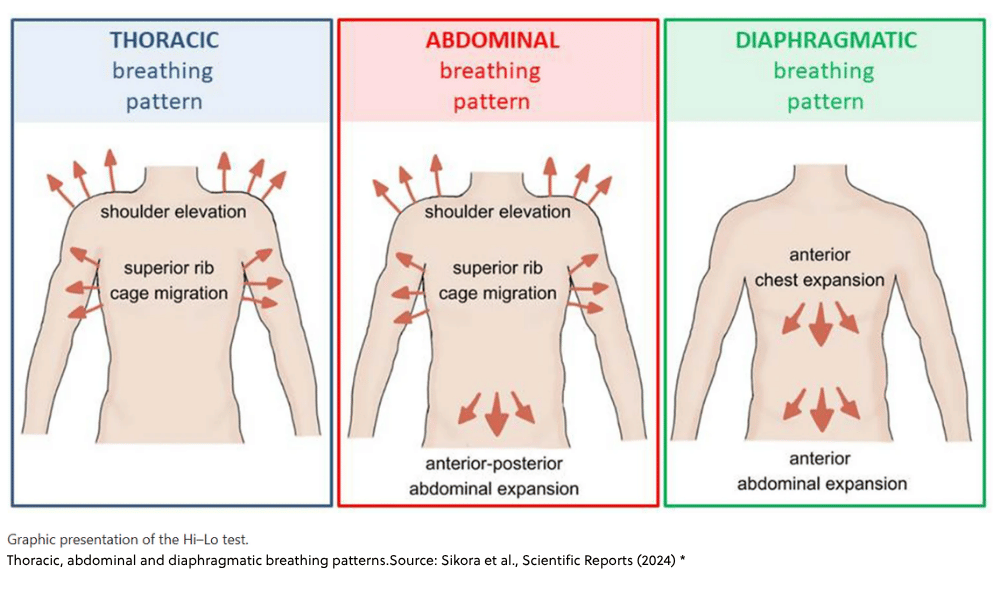
Breathing is normally driven mainly by the diaphragm, the body’s primary breathing muscle. In a breathing pattern disorder, breathing becomes more reliant on the chest and neck muscles.
This can make breathing feel:
- more effortful
- less natural
- more noticeable, especially during exercise or stress
Importantly, lung function remains normal — but the sensation of breathlessness is still very real.
What do patients usually notice?
Patients are often fit and active but describe similar experiences:
They may feel they cannot take a full satisfying breath, notice breathlessness during exercise that feels out of proportion to their fitness, or become increasingly aware of their breathing throughout the day.
Sometimes symptoms develop gradually, and patients begin to worry something serious is being missed.
This visual can help demonstrate how overuse of chest and neck muscles increases the effort of breathing, even when the lungs themselves are healthy:
Why does this happen?
In some cases, the body adopts a “chest-dominant” breathing pattern, using smaller accessory muscles rather than the diaphragm.
This is sometimes seen after respiratory infections, periods of stress, or when breathing becomes subconsciously over-focused. Over time, this pattern can persist even after the original trigger has resolved.
Why don’t inhalers help?
Inhalers are designed to treat airway narrowing and inflammation, such as in asthma.
If the underlying issue is breathing coordination rather than airway disease, inhalers will not address the cause — which is why symptoms may persist despite treatment.
Can this be treated?
Yes — and often very effectively.
Treatment focuses on:
- understanding the condition and reducing anxiety around symptoms
- retraining breathing patterns
- improving diaphragm use
- specialist respiratory physiotherapy where needed
Many patients improve significantly once they understand what is happening and learn how to reset their breathing pattern.
When should I seek further assessment?
You should consider specialist respiratory assessment if you are fit and active but still breathless, if symptoms persist despite normal lung tests, or if inhalers have not helped.
It may be appropriate to consider a more detailed respiratory assessment.
* Sikora, M., Mikołajczyk, R., Łakomy, O. et al. Influence of the breathing pattern on the pulmonary function of endurance-trained athletes.
Rapid Respiratory Assessment Pathway
We offer a fast access respiratory assessment service for adults aged 18 and over who would prefer not to wait for an NHS referral. Patients receive a 30 minute triage call with a Respiratory Physiologist, diagnostic testing within 48 hours and consultant review with clear outcomes and documented results.
Pathways available:
- Undiagnosed or uncontrolled asthma
- Persistent cough
- Sleep apnoea
- Long covid
To access the service, call 01622 538 186 or email cardiactriage@kims.org.uk.
Article produced by

KIMS Hospital