Disrupted Sleep: What Your Sleep Quality Is Really Telling You
Blog Events Health News 3rd August 2026 Enquiries & appointments
People often view sleep disruptions as a minor frustration. However, sleep is actually a highly sensitive dashboard for your health. When your sleep changes, it is usually your body’s earliest way of telling you that something is wrong with your breathing, heart rate or metabolism.
Discover answers to the most common questions Respiratory Consultant, Dr Syed Hassan, gets asked about what happens after you turn off the lights.
What are the overlooked warning signs hidden in a disrupted night?
Many people miss the subtle, quiet signs that their body is actively struggling during the night. The most common red flags you should look out for include:
- The Tornado Sheet effect – Briefly opening your eyes, rolling over or tossing and turning dozens of times a night without fully remembering it. If you consistently wake up with your bedsheets completely tangled, your body is working furiously hard while you sleep.
- Night sweats – Waking up feeling hot, clammy or drenched around your neck and chest. When your airway narrows, your body experiences a brief moment of panic, releasing stress hormones like adrenaline that trigger sudden sweating.
- Nighttime bathroom trips – Needing to use the toilet multiple times a night is often blamed on an ageing bladder. However, frequent breathing struggles place physical pressure on your heart, causing it to release a hormone that signals your kidneys to rapidly produce urine overnight.
- Early morning headaches – Waking up with a dull, heavy headache across your forehead that clears up within an hour of getting out of bed. This usually means your breathing is too shallow at night, causing carbon dioxide to build up in your bloodstream.
What are the symptoms of poor sleep actually telling you?
When you present with these specific symptoms of poor sleep like waking unrefreshed, night waking and snoring, they tell a very clear story about what is happening under the surface:
- Waking unrefreshed – If you get a solid seven or eight hours of sleep but still wake up feeling utterly exhausted, your sleep quality is broken. Your brain is likely being repeatedly kicked out of its deep, restorative sleep stages by hidden breathing struggles, leaving you physically unrecovered.
- Night waking – Tossing and turning or waking up abruptly around 2am or 3am is rarely random. It happens when your brain is forced to shock you awake to protect you from a drop in your blood oxygen levels or a closing airway.
- Snoring – Snoring is never just a funny habit or a social nuisance. It is the literal sound of a partially blocked airway. The tissues in your throat are vibrating because air is trying to force its way through a narrow gap. If that snoring features sudden gasps, choking sounds or quiet pauses, it means your breathing is temporarily stopping entirely, known as Obstructive Sleep Apnoea.
Which issues do people wrongly accept as “just how I sleep”?
We have a habit of dismissing medical symptoms as minor personal quirks. Many people wrongly normalise severe sleep degradation by telling themselves:

“I’ve always been a loud snorer”
Treating heavy snoring like an unchangeable personality trait rather than an active airway obstruction that can and should be fixed.
“I’m just a naturally light sleeper”
Assuming you are simply sensitive to every tiny sound. In reality, your body is often already on a high-stress alert status due to underlying physical issues, leaving you right on the edge of consciousness and easily startled awake.
“I just need to catch up on weekends”
Believing you can repay a massive sleep debt from the working week by sleeping in until noon on Saturday and Sunday. This actually confuses your internal body clock further, making Sunday night insomnia much worse.
What are the health risks of ignoring persistent sleep issues?
Ignoring a chronic sleep issue is exactly like leaving a major dashboard warning light flashing in your car. If your breathing or sleep structure is broken every night, it places a massive physical burden on your vital organs over time:
- Heart strain and stroke – Frequent drops in your oxygen levels cause your blood pressure to spike violently overnight. Over months and years, this direct strain damages your blood vessels, significantly increasing the risk of chronic high blood pressure, irregular heartbeats (like Atrial Fibrillation), and strokes.
- Metabolic issues – Poor sleep completely alters how your body processes fuel. It disrupts your hunger hormones, making it much harder to manage weight and significantly increases your risk of developing Type 2 diabetes.
- Mental fatigue – Your brain relies on deep, uninterrupted sleep to flush out waste products and organise your memories. Without it, you face a much higher risk of long-term memory decline, chronic anxiety, and depression.
The one change everyone should make to improve their sleep
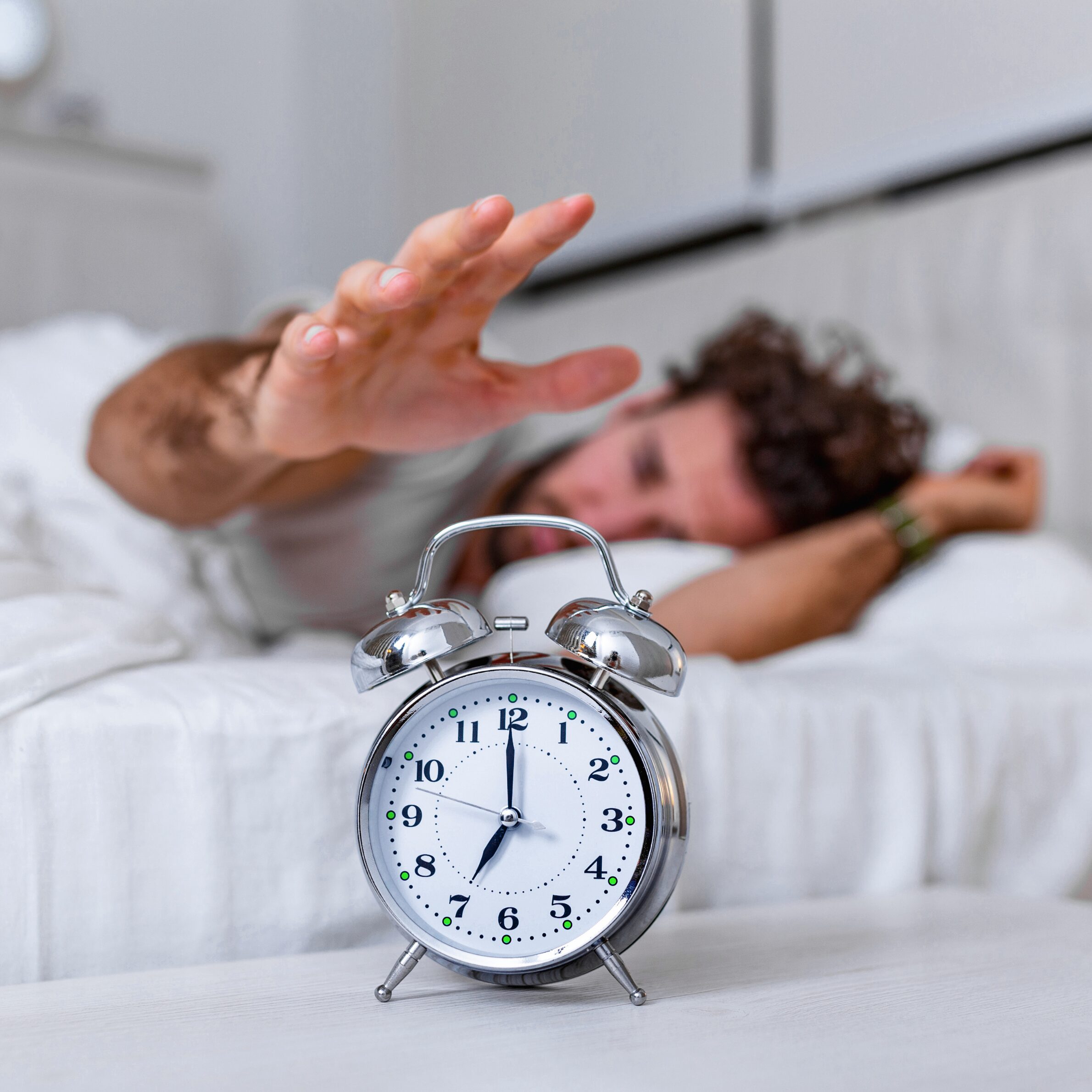 Fix your wake-up time.
If you change absolutely nothing else about your sleep routine, you’ll see an improvement in your quality of sleep with this simply yet effective change.
Pick a realistic time to get out of bed and stick to it every single day of the week—including weekends, and completely regardless of how poorly you think you slept the night before.
Getting out of bed at the exact same time every morning anchors your brain’s internal circadian clock. This consistency allows your body to build up a healthy, natural “sleep drive” throughout your waking hours. By the time your head hits the pillow the following night, your body is genuinely primed to fall into a deep, uninterrupted and restorative sleep.
When does a sleep problem become something worth investigating?
You do not need to see a specialist for every single bad night. However, you should look out for the clinical Rule of Threes based on standard practice. It is time to get your sleep investigated properly if your issues happen:
- At least 3 nights a week
- For 3 weeks or longer
- Heavily impact your day (causing severe brain fog, intense irritability, or dangerous midday sleepiness while driving or working).
If you meet these criteria, a simple, non-invasive home sleep study is the standard way to investigate. You take a small, lightweight device home to wear for one night in your own bed. It uses a chest band, a small tube under your nose and a finger clip to map your breathing and oxygen levels, giving a perfect blueprint to fix your sleep.
Find out more about Sleep Studies
Article produced by

KIMS Hospital